

Essential Oils for Sleep: Resetting the Nervous System Before Bed
A frequency drop from the ZenShift Field
Author: ZenShift
Published: July 13, 2026
Estimated Read Time: 6 min read
Portal: ZenShift Apothecary
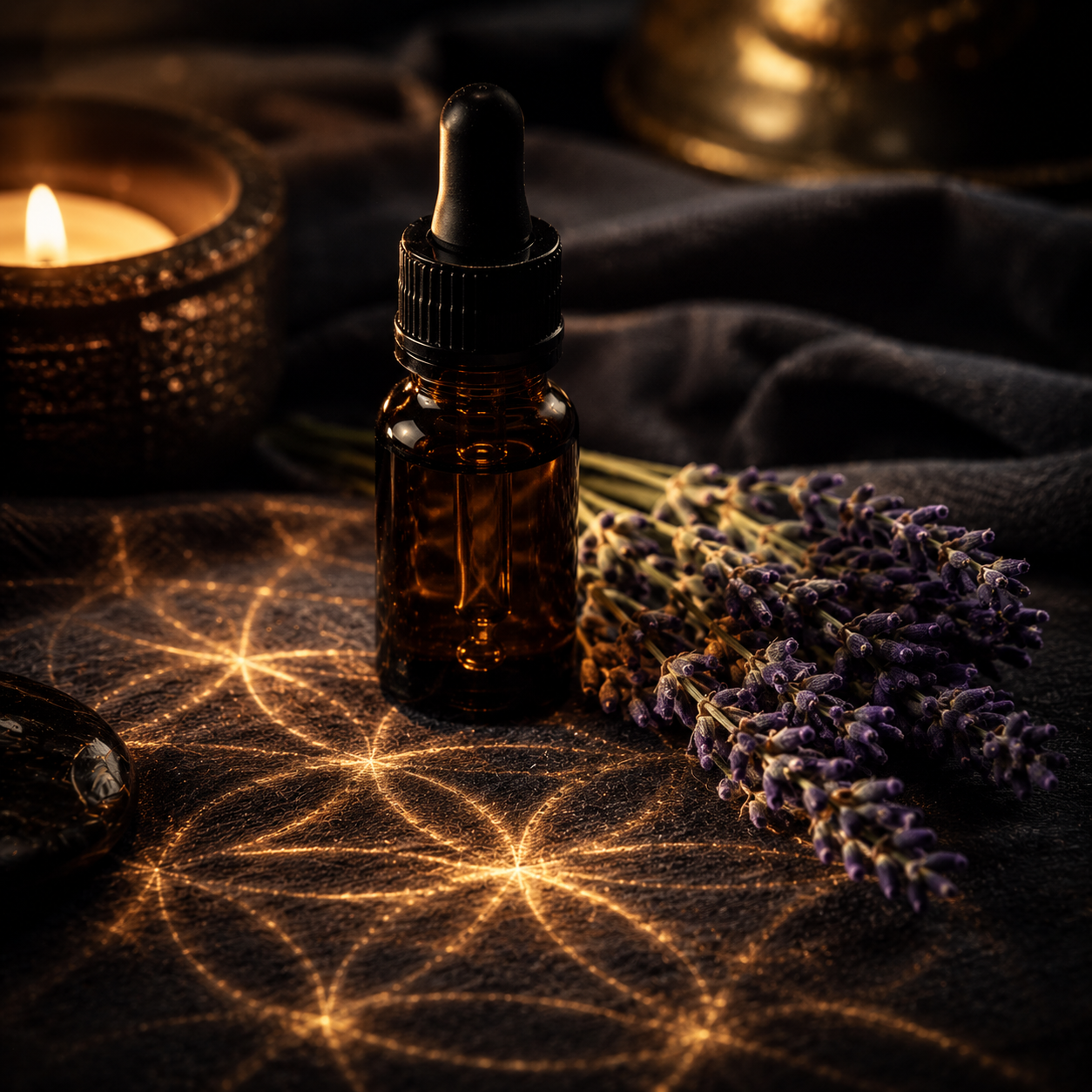
When you cannot sleep, the problem is rarely the sleep itself. It is a nervous system that has not received a clear signal that the day is over. Essential oils work at the parasympathetic level, not as fragrance, but as a physiological cue that shifts the body from activation to restoration. Here is what actually works and how to use it.
Most sleep problems are not sleep problems.
They are nervous system problems that show up at bedtime, because bedtime is the first moment in the day when the body is asked to stop, and the body has been running a stress signal for so long that it has forgotten how.
The bedroom is dark. The phone is down. There is nothing left to manage. And the nervous system, primed for vigilance through fourteen hours of continuous demand, cannot locate the off switch.
Melatonin helps some people. Magnesium helps others. Sleep hygiene advice, consistent bedtime, cool room, no screens, addresses the conditions around sleep without touching the underlying physiological state that determines whether sleep arrives.
Essential oils work at a different layer. Not as fragrance, though the sensory experience matters, but as direct input to the olfactory system, which connects more rapidly and more directly to the nervous system than almost any other sensory pathway. The right oils, used in the right way, send a physiological signal that the body recognizes and responds to before the mind has time to override it.
Why you cannot sleep, and what is actually happening
The autonomic nervous system has two primary modes. The sympathetic mode, fight, flight, or freeze, is the activation state. Heart rate up, breath shallow, muscles primed, attention narrowed. It is designed for managing threat, and modern life keeps it engaged far longer than it was designed to run.
The parasympathetic mode, rest and digest, is the recovery state. Heart rate slows, breath deepens, muscles release, digestion resumes, the body begins the repair processes that require genuine rest to complete. Sleep is not possible in sympathetic dominance. The body will not allow full rest when it believes a threat may still require response.
The transition from sympathetic to parasympathetic does not happen automatically at bedtime. It requires a signal, a clear physiological cue that the activation state is no longer needed and the recovery state can begin. For most people in chronic stress, that signal is weak, delayed, or absent.
Essential oils provide that signal through the olfactory system. Smell is the only sense with a direct neural pathway to the limbic system, the brain's emotional and autonomic regulation center, bypassing the cortex entirely. This is why scent produces such immediate and involuntary responses. The information does not need to be processed consciously before it reaches the systems that govern physiological state.
The right scent, delivered at the right moment, reaches the parasympathetic system directly and produces a measurable shift in physiological state within minutes.
The oils that reset the parasympathetic system
Lavender is the most researched essential oil for sleep and anxiety. Its primary active compounds, linalool and linalyl acetate, interact with GABA receptors, the same inhibitory receptors targeted by benzodiazepines and other anti-anxiety medications. Multiple controlled studies have demonstrated lavender's effects on reducing heart rate, lowering blood pressure, decreasing cortisol, and improving subjective sleep quality. It is not a sedative, it does not force sleep. It supports the physiological conditions that allow sleep to arrive naturally.
Bergamot is the anxiolytic oil, its primary value is in reducing the anxious mental activation that keeps people awake rather than in directly inducing drowsiness. The cognitive layer of sleeplessness, the racing thoughts, the rehearsal of tomorrow's demands, the inability to stop the mental narration, responds particularly well to bergamot. It is best used in combination with a more sedating oil like lavender or cedarwood rather than alone.
Cedarwood contains cedrol, a compound that has demonstrated sedative effects in research, reducing activity in the central nervous system and lowering blood pressure and heart rate. It has a deep, grounding, woody scent that many people find particularly effective for the physical body relaxation that precedes sleep.
Sandalwood works on the nervous system through a different pathway, its primary compound interacts with olfactory receptors in the skin as well as the nose, producing a physical relaxation effect that many people describe as a settling of the body from the outside in. It is a deeply grounding oil that works particularly well for people whose sleeplessness presents as physical tension rather than primarily cognitive activation.
Roman Chamomile has the most consistently calming profile of any essential oil, gentler than lavender, with a soft, apple-adjacent scent that produces a parasympathetic response without the intensity of some of the stronger oils. It is particularly useful for people who are highly sensitive or who find stronger oils overstimulating.
How to use them as a ritual, not a spray
The difference between applying essential oils as a wellness habit and using them as a frequency practice is intention and consistency.
A spray of lavender on the pillow is not nothing. But it is a fraction of what is possible when the oils are used as part of a deliberate pre-sleep ritual, a sequence that signals to the nervous system that the transition from activation to restoration is beginning.
Diffusion thirty to sixty minutes before bed allows the olfactory system to begin receiving the parasympathetic signal while the body is still in its pre-sleep wind-down. The scent enters the environment and begins working before the person is even in bed.
Topical application to pulse points, the wrists, the temples, the base of the skull, using a diluted blend in a carrier oil delivers the compounds more directly to the body. The warming of the skin volatilizes the oil and sustains the release of aromatic compounds over a longer period than diffusion alone.
A pre-sleep application ritual, three to five minutes of deliberate application with some attention to the breath, compounds the effect. The ritual itself becomes a nervous system cue. Over time, the body begins to associate the scent and the practice with the physiological state that follows, which means the onset of that state begins to anticipate the ritual rather than follow it.
The pre-sleep sequence
A workable sequence that builds this effect.
Diffuse a blend of lavender and cedarwood in the bedroom beginning thirty minutes before intended sleep time. Dim the lights. Reduce all screens.
Apply a diluted blend of lavender, bergamot, and sandalwood to the wrists and the back of the neck. Take three deliberate breaths, slow exhale, longer than the inhale, while the scent is close to the face.
Get into bed without engaging the phone. If the mind is active, allow the breath to be the focus rather than attempting to stop the thoughts.
The oils are doing their work. The nervous system is receiving the signal. The body knows what to do when the signal is clear enough.
Let it.