
Full Moon and New Moon Rituals: Using Lunar Cycles as a Frequency Calendar
A frequency drop from the ZenShift Field
Author: ZenShift
Published: July 13, 2026
Estimated Read Time: 6 min read
Portal: ZenShift Apothecary
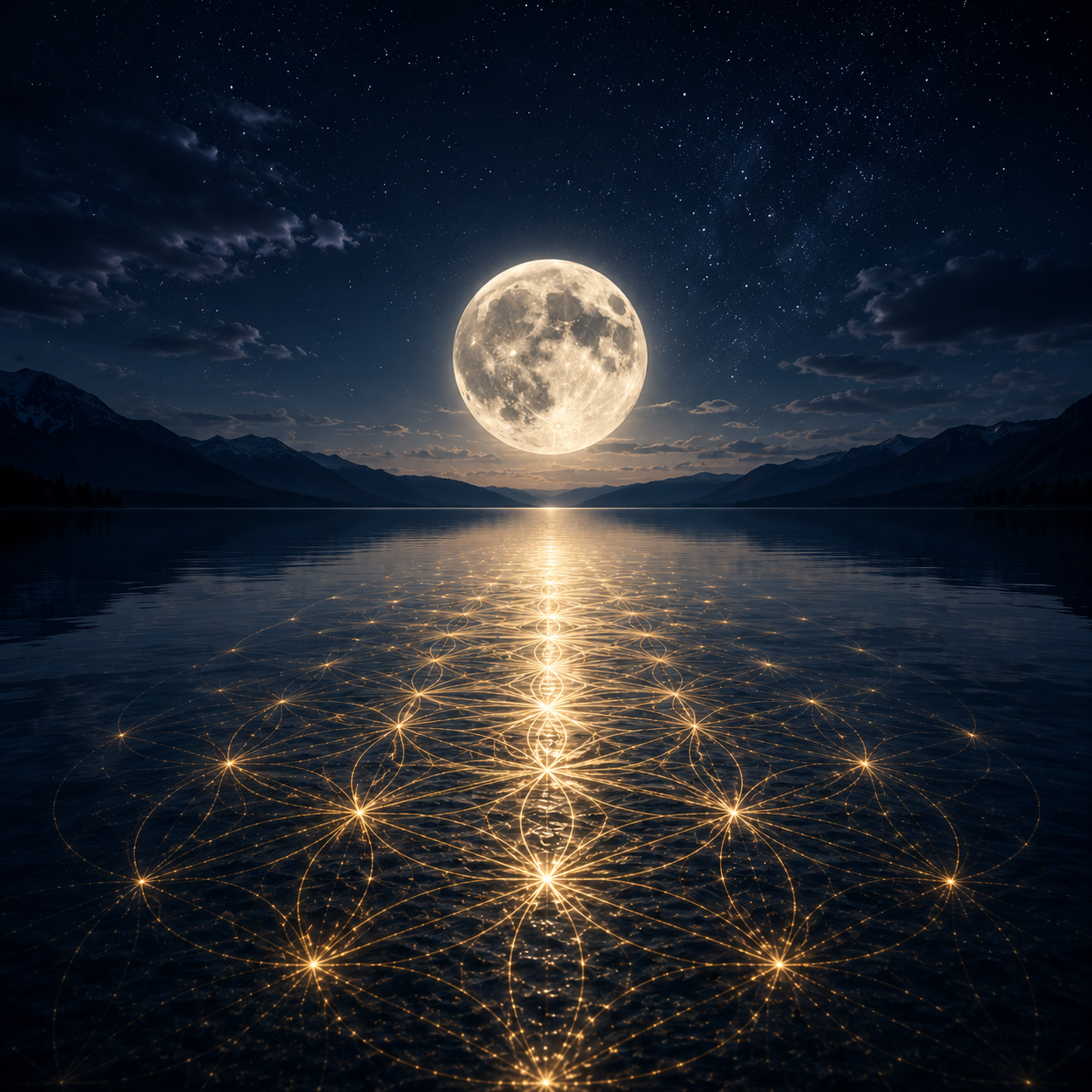
The lunar cycle is not astrology content. It is a natural frequency calendar, a rhythmic structure that has been used across traditions to time intentional release and intentional planting. Here is how the full moon and new moon function as distinct energetic phases, and how to work with them using oils, herbs, and crystals.
The moon has governed natural cycles for as long as life has existed on this planet.
The tidal system. The agricultural calendar. The menstrual cycle. The behavior of ocean creatures, migratory birds, and plant growth patterns. None of these relationships are mystical, they are physical, documented, and understood through the same gravitational and electromagnetic mechanisms that govern everything else in the natural world.
The idea that the lunar cycle might also influence human physiology and the energetic field is not a leap. It is an extension of the same logic, that a body made primarily of water, operating as a complex electromagnetic system, embedded in a planet that is demonstrably responsive to lunar gravitational and electromagnetic forces, might also be responsive to those forces.
Most people feel the full moon before they think about it. A heightened emotional intensity. Sleep that is lighter or more disrupted. A sense of things coming to a head. The research on lunar effects on human sleep and behavior is contested, but the experiential report is consistent enough across populations that dismissing it entirely is less intellectually honest than taking it seriously.
The more useful question is not whether the moon affects us. It is how to work with it rather than simply be subject to it.
How the moon affects your field
The lunar cycle runs approximately twenty-nine and a half days, from new moon to full moon and back. The two primary phases that most lunar practices work with are not opposites in the sense of positive and negative, they are distinct functional phases, each with a different energetic quality and a different appropriate type of intentional work.
The full moon is the peak of the cycle, the point of maximum lunar illumination and, in the traditional understanding, maximum energetic intensity. What has been accumulating during the waxing phase reaches its fullest expression at the full moon. Emotions that have been building surface. Patterns that have been running beneath consciousness become visible. The field is full, which makes it the natural time for release, for clearing, for letting go of what has reached completion or what is no longer serving.
The new moon is the opposite point, the dark moon, when lunar illumination is absent. It is the quietest, most inward point of the cycle. In the traditional understanding, it is the emptied field, the space after release that is available for new planting. Intentions set at the new moon are working with the most receptive phase of the cycle, the point at which the field is cleared and available to receive new direction.
Working with these two phases does not require belief in astrology. It requires only the recognition that natural cycles are real and that timing intentional action with natural rhythmic structures is a sound principle, not a mystical one.
The full moon: what to release and how
The full moon practice is a release practice. Its function is to consciously identify and let go of what has accumulated, the emotional weight, the patterns, the stories, the attachments that are no longer aligned with where you are moving.
This does not need to be elaborate. The most effective full moon practices are simple enough to be sustainable month after month.
A workable full moon ritual: in the evening of the full moon, create a brief period of deliberate quiet. Light a candle. Diffuse or apply frankincense, the field-clearing oil, to set the energetic tone. Take a few minutes to identify, specifically, what you are releasing. Not generally, specifically. A pattern. A resentment. A story about yourself that has been running past its useful life. A relationship dynamic. An outcome you have been gripping.
Write it down. The act of writing brings the internal to the external, it moves the pattern from the energetic field into the physical world where it can be addressed directly.
Then release it in whatever form feels right. Burning the paper is the traditional method, the fire transforms the physical object and provides a clear physical signal that the release has occurred. If burning is not practical, water works similarly, writing on paper that dissolves, or simply releasing the written intention into moving water.
Close with intention. State, simply and directly, what you are making space for as the pattern releases.
The new moon: what to plant and when
The new moon practice is a planting practice. The field has been cleared, at the full moon two weeks prior, and is now available to receive new direction.
New moon work is about intention, not action. The new moon is not the time to launch, to push, or to force. It is the time to plant clearly and then step back, to state what you are calling in and trust the cycle to carry it forward.
A workable new moon ritual: in the evening of the new moon, again with deliberate quiet and a candle. Use sandalwood, the grounding and anchoring oil, to support a quality of rootedness and presence. Write your intentions for the coming cycle. Not a to-do list, an energetic statement of what you are aligning with and calling forward.
Be specific without being attached to form. State the quality of experience you are seeking rather than the specific circumstance you believe will produce it. The field responds to frequency, not to logistics.
Seal the intention and set it aside. The new moon practice is not revisited until the full moon, when what has emerged during the cycle is reviewed and what has served its purpose is released.
Tools for each phase
Oils, herbs, and crystals all have phase-appropriate applications that deepen the practice without complicating it.
For the full moon: frankincense for field clearing, white sage or palo santo for space clearing, amethyst for clarity and release, moonstone for lunar attunement. Water is the full moon's natural element, a salt bath on the full moon supports physical and energetic release simultaneously.
For the new moon: sandalwood for grounding the intention, rose quartz for heart-centered planting, citrine for activating the will and creative field, black tourmaline for anchoring what is being called in. Seed imagery is useful, some practitioners literally plant a seed at the new moon as a physical anchor for the intention.
The tools amplify the practice. They are not required for the practice to work. What is required is clarity of intention and consistency of engagement with the cycle over time.
One month is a beginning. Six months is a practice. A year is a relationship with the natural rhythm that begins to produce results that the single-cycle approach rarely reaches.