

What Is Slow Travel — And Why It Might Be the Only Kind Worth Taking
A frequency drop from the ZenShift Field
Author: ZenShift
Published: June 28, 2026
Estimated Read Time: 6 min read
Portal: ZenShift Travel
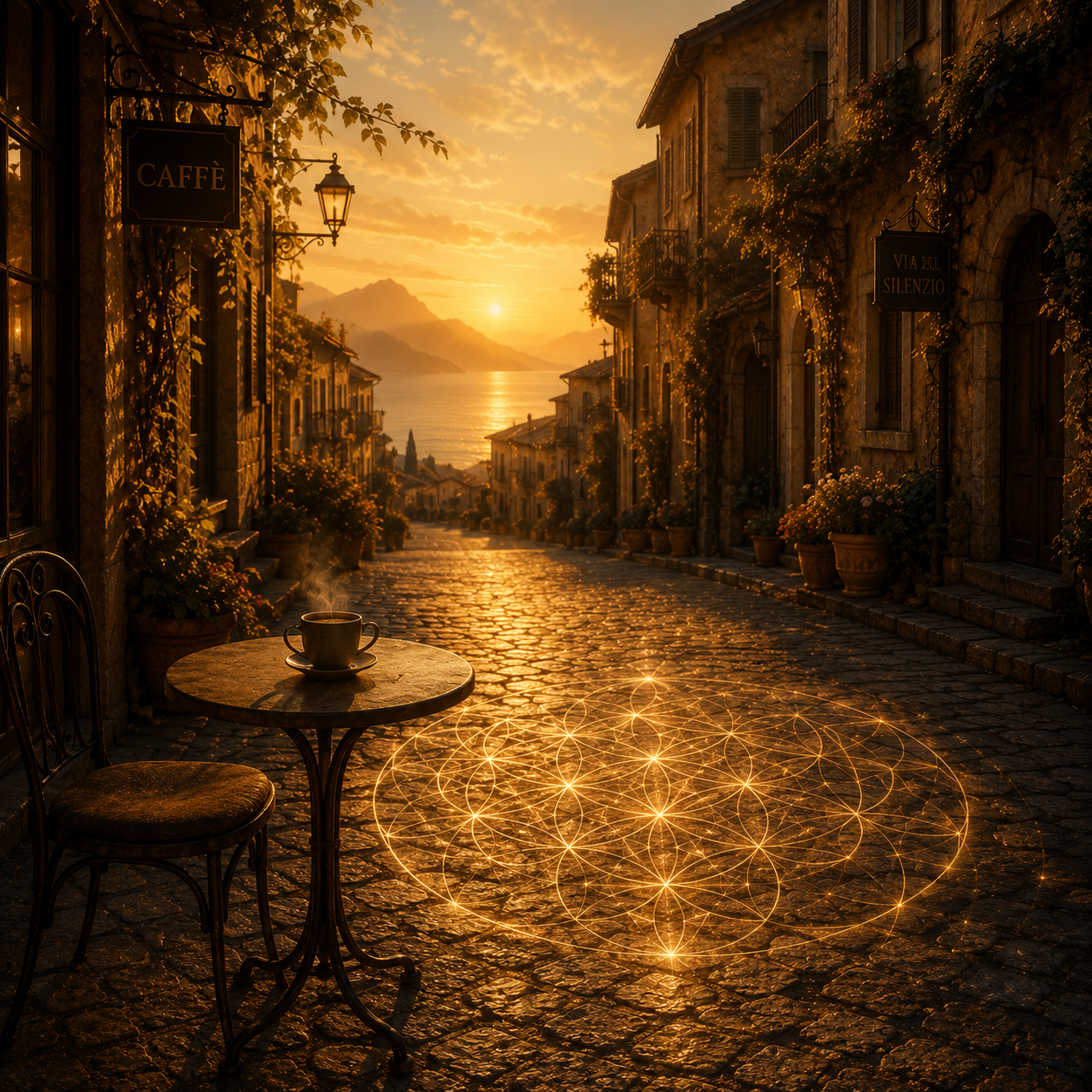
Slow travel is not a budget strategy or a retirement plan. It is a frequency choice. The Loop follows you when you rush through places the same way it follows you through weeks at home. Presence is a frequency. Slow travel is how you match it.
Slow travel has become a trend. And like most trends, the label is being applied to things that have little to do with what it actually means.
In travel media, slow travel often means staying in one place for a few extra days, renting an apartment instead of booking a hotel, visiting fewer tourist sites and more local markets. These are fine choices. But they describe a pace, not a practice. And the distinction matters, because the pace of slow travel without the internal shift it is pointing toward is just a slower version of the same consumption.
Real slow travel is not about how long you stay. It is about what you are doing while you are there.
The difference between visiting and inhabiting
Tourism is oriented toward the accumulation of experience. You arrive, you take in what the place is known for, you move on. The experience is real. The exposure is genuine. But the fundamental relationship is extractive, the traveler takes from the place, processes it, and carries it home as content.
Inhabiting a place is different in kind, not just degree. When you inhabit somewhere, you begin to participate in its rhythms rather than observe them. You shop at the same market twice and recognize a face. You find a bench you return to. You notice how the light changes at different times of day. You stop being a visitor and start being, temporarily, someone who lives there.
This shift does not require months. It can happen in a week if the traveler is genuinely present. But it cannot happen in forty-eight hours of optimized sightseeing. The nervous system needs time to complete the transition from the pace of home to the pace of somewhere else, and most short trips end before that transition is finished.
Why slow travel is rising
The post-pandemic travel landscape has shifted in ways that are still being processed. People who spent extended periods in constrained environments came out with a different relationship to time, a more acute awareness of what it costs to spend weeks and months in conditions that do not match who they actually are or want to become.
There is also a generational dimension. The travelers who grew up watching their parents optimize every vacation for maximum coverage, the Europe in ten days itinerary, the cruise that hits seven ports, are making different choices. Not because efficiency is wrong, but because they have noticed that efficiency and depth are often in tension. That the places that actually changed them were the ones they had time to settle into.
Remote work has accelerated this. The ability to work from anywhere has made extended stays economically viable for a growing segment of travelers. The slow travel trend is partly a logistics story, when work follows you, the minimum stay of a trip is no longer constrained by vacation days.
But underneath the logistics is something more significant: a collective hunger for a different relationship with time. For travel that is not just departure and return, but genuine inhabitation of somewhere other.
What slowing down actually does to the body
The nervous system does not switch registers instantly.
When you leave home for a trip, the body carries the residue of its ordinary pace for longer than most people realize. The first day or two of any trip, the mind is still partially at home, finishing conversations, running through the list of things left undone, anticipating the return. This is not a character flaw. It is how the nervous system manages transition.
In a short trip, this residue never fully clears. You are technically somewhere else, but the body has not arrived. The experience accumulates on the surface of a nervous system that is still, in some sense, waiting to go home.
Slow travel gives the transition time to complete. By the fourth or fifth day in one place, particularly when the itinerary is not full, something shifts. The background hum of home begins to quiet. The body registers that it is actually somewhere else. The present environment begins to have more influence over the internal state than the memories and anticipations of home.
This is when real encounter becomes possible. When the place can actually reach you.
For many slow travelers, the first week of a longer stay is the clearing period, often unremarkable, sometimes even uncomfortable as the residue of home finishes processing. The second week is when the real experience begins. This is why the travelers who report the most significant shifts from travel tend to be those who stayed long enough for the clearing to complete.
How to choose a slow destination
Not every destination supports slow travel equally.
The most obvious filter is pace. Cities organized around maximum throughput, major tourist capitals with heavy crowds, optimized infrastructure, and an implicit expectation that you will cover the highlights and move on, work against the slow travel mode. The environment itself communicates urgency.
Places that support slow travel tend to have a different character. They reward return visits. They have neighborhoods rather than just attractions. They have a daily rhythm that a visitor can begin to sync with rather than simply observe. They are interesting without being exhausting.
Within any destination, slow travel is also a matter of where you stay. A central hotel in a tourist district keeps you in tourist consciousness. An apartment in a residential neighborhood, even in a major city, puts you in contact with ordinary life in a way that changes the nature of the experience.
The question to ask when choosing a slow travel destination is not what is there to see, but what would it feel like to actually live there for two weeks. If the answer is interesting, if the imagination produces something other than a checklist, the place is probably worth going slowly.
Slow travel and the post-hustle generation
There is a deeper current running beneath the slow travel movement that is worth naming.
The dominant framework for a well-lived life, as inherited from the post-war generation, has been one of accumulation and optimization. More experiences. More destinations. More to show for the time. The well-traveled person was the one who had been to the most places.
That framework is visibly losing its grip. The travelers who are choosing slow are often choosing it because fast stopped delivering what it promised. The fifteenth country visited did not produce more meaning than the fifth. The optimized itinerary produced impressive photographs and a genuine sense that something was missing.
What is rising in its place is a different metric. Not breadth but depth. Not accumulation but encounter. Not coverage but presence.
Slow travel is the logistical expression of that shift. It is what happens when the traveler decides that what they actually want is not to have been somewhere, but to have been changed by it.
That change requires time. It requires the willingness to be somewhere without immediately consuming it. It requires patience with the clearing period, and trust that what emerges on the other side of it is worth the wait.
It almost always is.