

Your Home Remembers
A frequency drop from the ZenShift Field
Author: ZenShift
Published: August 26, 2025
Estimated Read Time: 3 min read
Portal: ZenShift Interiors
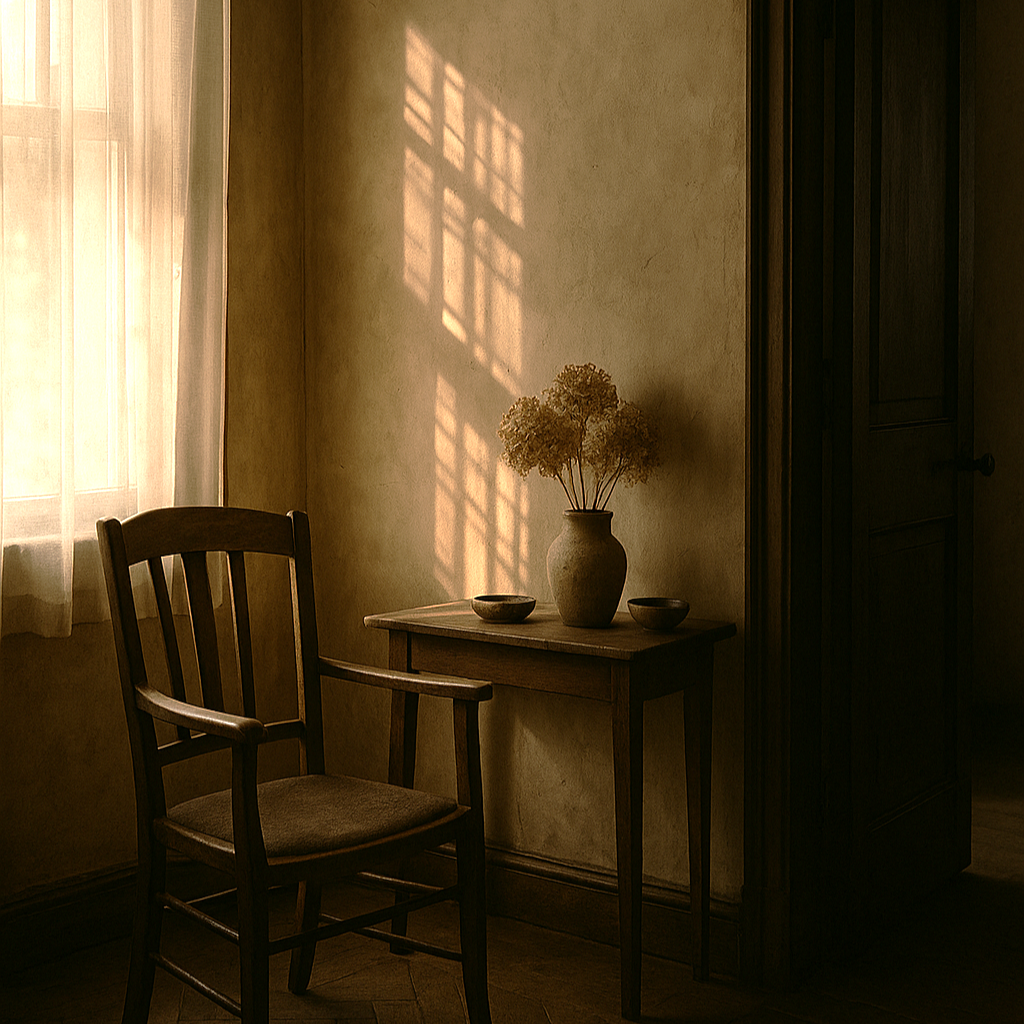
Your home has been keeping time. It holds the weight of every season you've moved through, every version of you that unpacked boxes, argued, healed, started over. When it starts to feel off — not messy, not outdated, just off — that's not an aesthetic problem. It's a frequency signal. The ZenShift Interiors portal is built on one foundational understanding: space is not neutral. And when you learn to work with it consciously, everything that lives inside those walls becomes part of your evolution..
The walls remember.
Not metaphorically. The space you inhabit holds the residue of every mood, every conversation, every season you've moved through inside it. That argument from two years ago. The morning everything shifted. The long stretch when you were running on empty and the house just absorbed it.
Your home has been keeping time.
Most people don't feel this until something goes quietly wrong. The space starts to feel heavy. Or flat. Not chaotic, just off. Like breathing recycled air from a season that already ended.
The instinct is to rearrange. Buy something new. Open the windows.
And sometimes that helps.
But what's actually happening isn't an interior design problem. It's a frequency signal. The space is telling you something has shifted in you, and it hasn't caught up yet.
This is the Threshold Phase.
You're standing in a doorway between who you were and who you're becoming. And the home around you is still holding the old version. Not because it's broken. Because no one told it to let go.
The ZenShift Interiors portal isn't about trends or aesthetics. It's built on one foundational understanding: space is not neutral. Your home is an energetic environment. It has a pulse. It responds to intention. And it can either anchor you in what was, or become active infrastructure for what's next.
Working with your space consciously doesn't require a renovation. It requires attention.
Stand in the center of a room you spend time in. Close your eyes. Not to visualize anything specific, just to feel. Ask, quietly: What is this space still holding? What is it ready to release?
The answers don't always come as words. Sometimes they arrive as sensation. A tightness in the chest. A sudden exhale. A memory you weren't expecting.
That's information.
The ZenShift approach to space begins there, not with furniture placement, but with listening. Before anything moves, before anything is cleared or purchased or rearranged, the space gets witnessed. What's present gets acknowledged. Then, with intention, it begins to shift.
This is design as devotion. Not performance. Not the version you photograph for someone else, the version that actually holds your frequency while you sleep, eat, work, and think.
The objects in your home are not passive. They carry the energy of where they came from, who made them, what happened near them. Some of what you've been living with is ready to leave. Some of it is more sacred than you've given it credit for. Part of learning to work with your space is learning to tell the difference.
What's staying because you love it, and what's staying because no one has given it permission to go?
There's no formula here. No checklist that produces alignment. But there is a starting point: presence. Bringing full attention into the space you inhabit and beginning, honestly, to feel what it's holding.
That's where the Interiors portal lives.
Not in the before and after. In the middle — the threshold — where the space and the person inside it start to move together.